Easy Job Solution Engineering Limited: Professional Removal of Buildings Department and Fire Services Orders, Safeguarding Your Property Compliance and Value
Removing removal orders, repair orders, or fire safety directions issued by the Buildings Department or the Fire Services Department is the key step to ensuring property compliance, avoiding fines, and restoring property value.
Easy Job Solution Engineering Limited possesses extensive local experience in Hong Kong, is well-versed in the Buildings Ordinance and Fire Safety Ordinances, and provides one-stop professional inquiry, assessment, construction, and report submission services to help you promptly remove orders and restore the property’s normal use and transaction capabilities.
Our professional team comprises experienced Authorized Persons and Registered Inspectors, supported by seasoned Registered Structural Engineers and Registered Geotechnical Engineers who personally oversee every case, delivering the most precise technical support and comprehensive compliance assurance.
Serious Consequences of Non-Compliance with Orders
Under the regulations of the Buildings Department and the Fire Services Department, failing to comply with statutory orders without reasonable excuse constitutes a criminal offence and may result in the following risks:
- Fines up to $200,000 and $20,000 per day (Buildings Department orders) or $25,000 and $2,500 per day (fire safety directions).
- Imprisonment of up to 1 year.
- Government execution of demolition or repair works, with full costs, supervision fees, and additional charges recovered from the owner.
- Registration of the order at the Land Registry (encumbrance), directly affecting property sale, mortgage, and transfer.
Choosing EASY JOB SOLUTION ENGINEERING LIMITED means choosing an efficient, compliant, and reliable solution.
Our professional team ensures every step fully complies with statutory requirements, allowing you to remove orders with complete peace of mind.
Our Service Scope
We specialize in handling the following common Buildings Department and Fire Services orders, providing comprehensive inquiry, on-site assessment, execution, and report submission services:
Section 24 Removal Order
Removal of unauthorized structures, illegal building works, or signboards.
Section 25 Order to Discontinue Change of Use
Resolution of illegal change of use issues.
Section 26 / 26A Repair / Survey Order
Repair of building structures or safety hazards.
Section 27C / 28 Underground Drainage Repair Order
Handling of pipework, drainage, or drainage system issues.
Fire Safety Directions (Cap. 502 / Cap. 572)
Compliance with the Fire Safety (Commercial Premises) Ordinance and Fire Safety (Buildings) Ordinance, including upgrading of fire safety installations.
Common Unauthorized Building Works and Violations
The following are frequently encountered unauthorized alterations by Hong Kong owners and tenants. These works can easily trigger Buildings Department orders or fire safety directions. Our professional team excels at handling them swiftly, safely, and in full compliance:
Removal of Load-Bearing Walls
Determining whether a wall is load-bearing cannot rely solely on visual inspection or material type. The most reliable method is to consult the original building plans at the Buildings Department. Removing load-bearing walls not only compromises the structural stability of the unit but also affects the safety of the entire building, with potentially severe consequences in the event of failure.
Enclosing Open Roofs
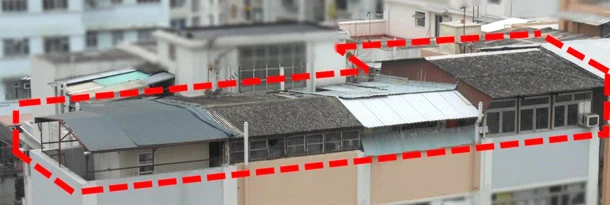
The most common examples are rooftop structures on old tenement buildings or industrial buildings. During typhoons or heavy rain, these structures pose risks to occupants and the general public. Such rooftop constructions will not be approved through formal applications or minor works. The correct approach is to remove them promptly and restore the roof to its original state to avoid further enforcement action by the Buildings Department.
Modification of Fire-Resisting Compartments
Modification of fire-resisting compartments includes kitchen partition walls within residential units, fire walls between adjacent units, fire barriers between units and common corridors, and fire door lobbies leading to escape staircases. Many owners may believe these changes have minimal impact, but in the event of a fire, they can seriously endanger lives and property.
Subdividing Residential Units into Multiple Small Rooms
Due to high property prices in Hong Kong, some individuals with limited financial means opt for subdivided units commonly known as “cage homes.” These subdivision works often affect fire compartmentation, escape routes, drainage systems, and natural lighting requirements, with even more severe issues when located in industrial buildings.
Addition of Mezzanine Floors within Units
Many standalone units—whether residential, commercial, shop, or industrial—have high ceiling heights. Some owners or tenants add intermediate platforms to instantly increase usable floor area. This is a very common unauthorized construction. Since the works are carried out entirely inside the unit, they are usually difficult to detect from outside. In addition to potential structural safety risks, they also affect the calculation of the building’s overall usable floor area.
Enclosing Open Platforms
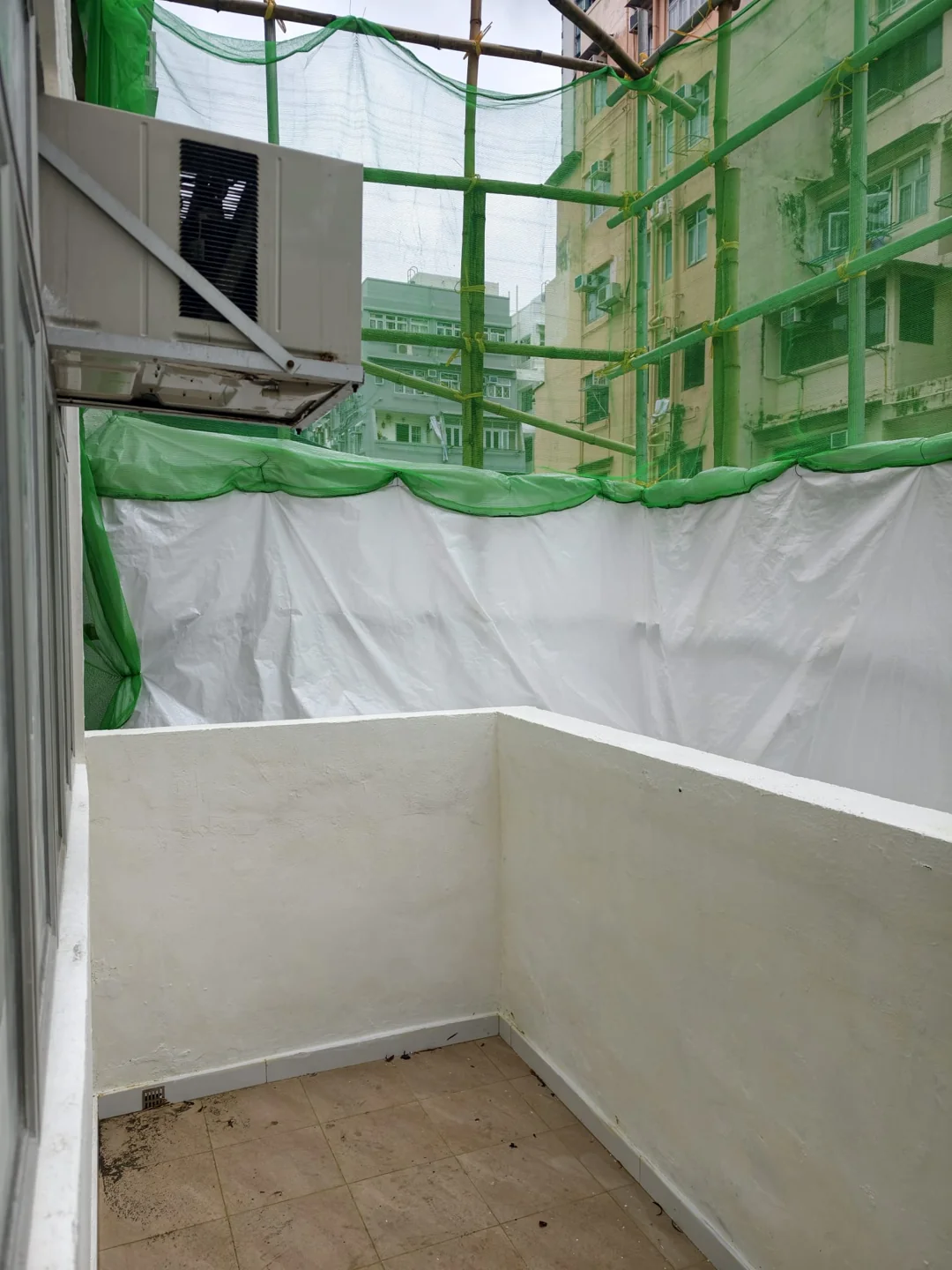
Some low-level units in residential or industrial buildings have open platforms. Many owners enclose them to create covered spaces for storage or other uses. Such works are equally difficult to approve. Prompt removal and restoration are recommended to avoid prosecution by the Buildings Department.
Modification of Drainage Pipe Systems
Following the COVID-19 outbreak, exposed drainage pipes in buildings were identified as potential virus transmission routes. The Buildings Department has issued multiple orders regarding unauthorized alterations to drainage pipes and the incorrect installation of anti-siphon devices, and has provided detailed guidelines on the correct installation of anti-siphon pipes.
Installation of Full-Height Glass Windows
Traditional street-facing units usually have a parapet wall approximately 1.1 metres high, with aluminium windows installed above it. Some owners remove the parapet to install full-height glass for a brighter, more open, and aesthetically pleasing appearance. Without formal approval from the Buildings Department, such modifications may compromise structural safety and violate fire safety regulations. The current legitimate approach is through a Class I Minor Works application.
Installation of Canopies or Awnings on External Walls
Old-style projecting fabric canopies or metal awnings on buildings are often simply designed and made with inferior materials, some of which may contain asbestos. They can easily detach during adverse weather, posing danger to passers-by. Designing and installing them in accordance with the Minor Works Control System can significantly enhance safety.
Modification of Building External Walls
Building maintenance or interior design sometimes requires modification of external walls. The most appropriate approach is to apply for approval under the Minor Works Control System. Since external wall alterations affect the overall appearance of the building and external walls are usually common property of all owners, prior consent from the Owners’ Corporation or property management company should be obtained.
Installation of Signboards on External Walls
External wall signboards are generally divided into shop-front signboards, projecting horizontal signboards over pavements or roads, and large vertical advertising signboards on upper floors. Deteriorated signboards can fall and cause accidents; there have been multiple cases of injuries and fatalities from falling signboards in the past. The Buildings Department’s Minor Works Control System provides clear regulatory guidelines for signboard installation. Ownership issues must also be considered, and prior consultation with the Owners’ Corporation or management company is strongly recommended.
Replacement or Modification of Street-Facing Aluminium Windows
This mainly involves replacing old aluminium windows, changing window frame designs, or enlarging window areas. Failure to follow the Buildings Department’s prescribed application procedures will affect both structural loading and fire safety requirements. Aluminium window works may fall under Class I, II, or III Minor Works, depending on the complexity and window dimensions.
Installation of Iron Gates at Building Entrance Lobbies
Some old buildings originally had no iron gates at the ground-floor lobby. For security reasons, some buildings install them themselves. If the new iron gate does not comply with fire escape route requirements, it will obstruct evacuation during a fire. Upon receipt of a Buildings Department order, it must be removed and the original state restored.
Installation of Air-Conditioner Supporting Brackets on External Walls
Air-conditioner heat-dissipation brackets on external walls can now be installed through the Minor Works Control System. Previously installed brackets may also be legally retained through declaration and verification procedures.
Professional Order Removal Process
- 1Record Inquiry and Verification
Using the order number, address, or building name, inquire the latest records from the Buildings Department or Fire Services Department (updated monthly) to clearly define the scope of the issue. - 2On-Site Professional Assessment
Licensed team conducts a detailed site inspection, analyses the violations or safety hazards, and formulates a repair or demolition scheme that complies with statutory requirements. - 3Execution and Supervision of Works
Using compliant high-quality materials and strictly following the Minor Works Control System (submission of MW03 form) for demolition, repair, or fire safety installation upgrades. - 4Report Submission and Inspection
Upon completion, submit the MW04 completion form and relevant reports to the Buildings Department or Fire Services Department for inspection. - 5Formal Order Removal and Follow-Up
Assist with the cancellation of Land Registry encumbrance registration to ensure the property is fully restored to a compliant status.
Selected Case Studies
Case 1: Causeway Bay Building Rooftop Removal Order (Section 24)
The building received a removal order due to unauthorized rooftop structures. We promptly engaged a registered contractor for safe demolition and external wall restoration, submitted MW03/MW04 forms and reports, and successfully removed the order within just two weeks, preventing fines and encumbrance registration for the client.

Case 2: Kowloon Residential Fire Safety Direction (Cap. 502)
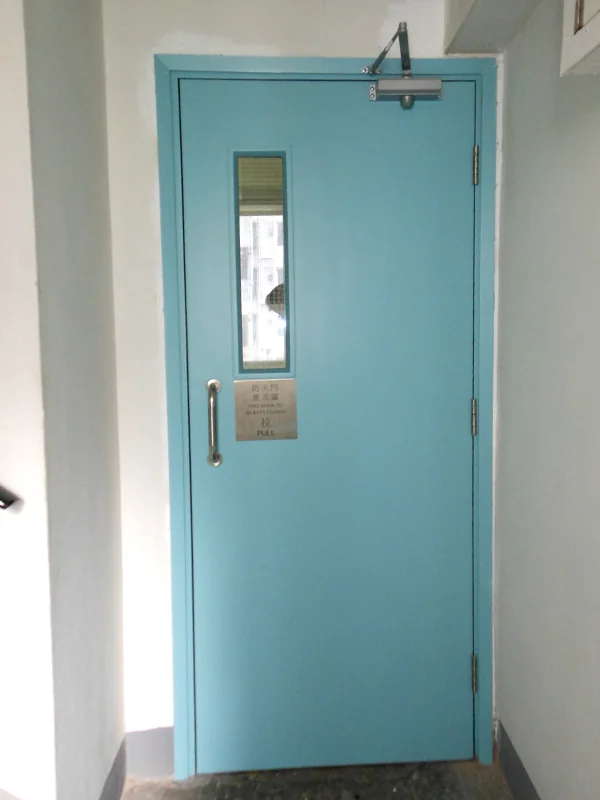
The residential unit received a fire safety direction requiring upgrading of fire safety installations. We installed compliant fire doors, fixed windows, fire extinguishing systems, and emergency lighting, completed testing and report submission, and successfully obtained Fire Services Department approval within 10 days, removing the order.
Main improvement items included:
Fire doors | Fixed windows | Enclosure of non-emergency facilities

Important Notes
- Order records can be checked via the Buildings Department’s online tool or by order number, address, or building name (updated monthly).
- The absence of public records does not mean there are no violations. Professional inspection is strongly recommended.
- Buildings Department hotline: 2626 1616 (answered by 1823); for Fire Services Department inquiries, please refer to the official website.
- Early action can prevent escalation to encumbrance registration or prosecution, protecting property value and transaction capability.
As long as a Buildings Department or Fire Services order remains unresolved, property value and usability will be affected.
Easy Job Solution Engineering Limited is committed to professionalism, speed, and full compliance to help you resolve issues completely.
Tel: 2364 2958 | Email: cs@hkejs.com
Our professional team is on standby 24 hours a day to provide immediate assistance.